
How Chimes and Bells Support Relaxation, Meditation and Sound Healing
Chimes and bells are used in sound healing to create gentle, resonant tones that encourage relaxation, mindfulness and deeper meditation. Instruments such as Koshi Chimes, Zaphir Chimes, Tibetan Bells, Temple Bells and Tingsha Cymbals help calm the nervous system, mark transitions within a sound journey and support a peaceful environment for healing and self-reflection.
The Gentle Voices of Sound Healing
When people first experience a sound bath or sound healing session, it is often the larger instruments such as crystal singing bowls, Tibetan singing bowls or gongs that capture their attention. Yet some of the most profound moments during a sound journey can come from the soft, shimmering tones of a simple chime or the clear resonance of a bell.
These delicate instruments have been used in spiritual traditions, meditation practices and ceremonial rituals for centuries. While they may appear modest in size, their ability to focus attention, create stillness and gently guide awareness makes them an essential part of professional sound healing.
At Lakshmi Sound Sanctuary in the Byron Bay Hinterland, chimes and bells are thoughtfully woven into sound baths, one-to-one healing sessions, retreats and practitioner training. Rather than being used simply for effect, each instrument is chosen with intention to support relaxation, mindfulness and the natural flow of a healing experience.
Understanding how these instruments work, and why different chimes and bells create different responses—offers a deeper appreciation of the subtle artistry behind professional sound healing.
Why Gentle Sounds Can Have Such a Powerful Effect
Modern life surrounds us with constant stimulation. Notifications, conversations, traffic, music and technology all compete for our attention, leaving many people feeling mentally exhausted before they even recognise it.
The human nervous system responds differently to gentle, harmonious sounds than it does to sudden or chaotic noise. Soft resonant tones naturally invite us to pause, breathe and become more aware of the present moment.
Unlike loud or demanding sounds, chimes and bells don't ask the listener to analyse or interpret. Instead, they create space.
That space often becomes the doorway into:
deeper relaxation
meditation
emotional release
mindful awareness
nervous system regulation
inner stillness
This is one of the reasons these instruments have remained part of contemplative traditions throughout history.
The Role of Chimes and Bells in Integral Sound Healing
Integral Sound Healing views each instrument as carrying its own unique voice.
Rather than trying to produce one continuous soundscape, experienced practitioners create movement throughout a session by introducing different frequencies, textures and dynamics.
Chimes and bells serve several important purposes within this process.
They may:
gently begin a meditation
signal a transition between different instruments
invite participants back into awareness
help reset attention
create spaciousness between deeper resonant sounds
encourage mindful breathing
provide moments of quiet reflection
Their simplicity is often what makes them so effective.
Different Chimes and Bells, Different Experiences
Although many people refer to them collectively as "meditation bells" or "healing chimes,"
each instrument possesses its own distinct tonal qualities, history and purpose.
Understanding these differences reveals why professional practitioners often use several varieties during a single sound healing experience.
Koshi Chimes – Nature in Musical Form
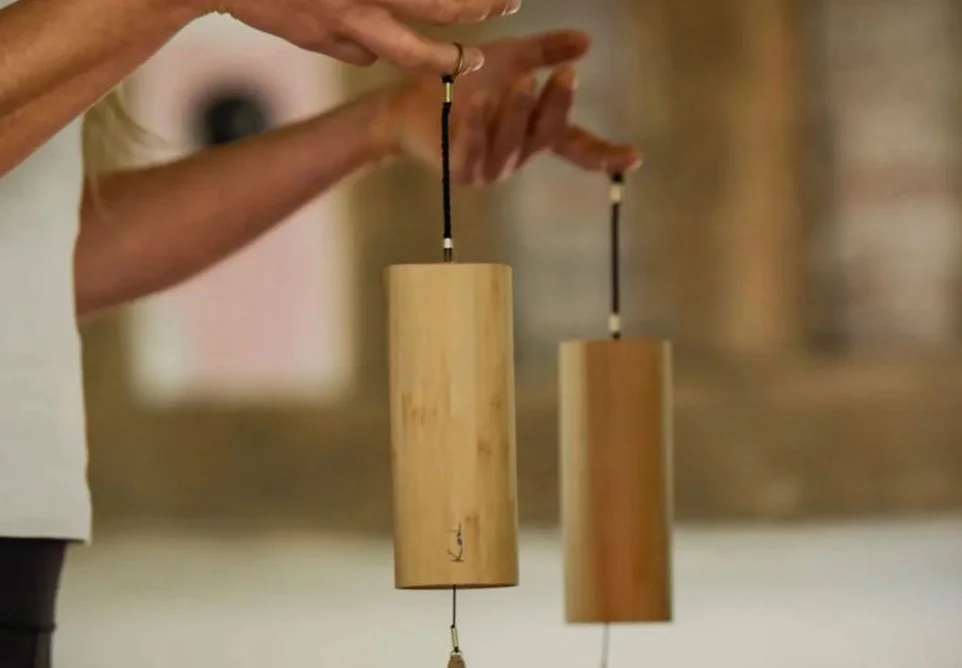
Koshi Chimes are among the most recognisable instruments in contemporary sound healing.
Handcrafted to represent the four classical elements—Earth, Water, Fire and Air—each chime produces a unique arrangement of naturally harmonising notes.
Rather than sounding like a traditional bell, Koshi Chimes create flowing cascades of gentle overtones that seem to float effortlessly through a room.
Many people describe their sound as:
uplifting
calming
spacious
playful
peaceful
Within sound healing sessions, Koshi Chimes are often used to soften transitions, encourage relaxation and create an atmosphere of openness.
Their light, melodic character makes them particularly effective at helping people release mental tension without overwhelming the senses.
Zaphir Chimes – Sustained Harmonic Resonance
While similar in appearance to Koshi Chimes, Zaphir Chimes produce their own distinctive tonal personality.
Their notes tend to linger longer, creating rich harmonic layers that slowly blend together as they fade.
Many practitioners appreciate the way these prolonged overtones encourage sustained mindfulness and deeper listening.
Rather than drawing attention to themselves, Zaphir Chimes often seem to dissolve into the surrounding soundscape, gently inviting listeners into quiet contemplation.
Tibetan Bells – Ancient Simplicity
For centuries, Tibetan Bells have accompanied meditation, prayer and spiritual practice throughout Himalayan traditions.
Their sound is typically more focused and grounding than wind chimes, producing a single clear tone that gradually expands before fading into silence.
Within sound healing, Tibetan Bells may be used to:
begin a session
conclude meditation
create intentional pauses
encourage mindfulness
invite deeper presence
Sometimes, a single bell can be more powerful than continuous sound, reminding participants that silence itself is an important part of healing.
Temple Bells – Resonance That Invites Presence
Temple Bells have long been associated with monasteries and sacred spaces across many cultures.
Their deep, lingering resonance naturally slows the pace of a room.
Rather than signalling urgency, as many modern bells do, Temple Bells invite stillness.
Their rich tones create a sense of ceremony, helping participants transition from everyday thinking into a more reflective state.
In sound healing sessions, they often mark significant moments, encouraging participants to let go of external distractions and settle more deeply into the experience.
Tingsha Cymbals – A Call to Awareness
Tingsha Cymbals produce one of the clearest sounds found within sound healing.
When gently struck together, they emit a bright, sustained tone that cuts cleanly through surrounding sounds.
Because of this clarity, they are frequently used to:
begin meditation
conclude meditation
regain focus
encourage mindful breathing
gently awaken participants after deep relaxation
Far from being abrupt, their sound creates a moment of heightened awareness, helping the mind return to the present with clarity rather than distraction.
Hand Bells and Bar Chimes – Adding Texture and Movement
Hand Bells and Bar Chimes introduce subtle movement within a sound journey.
Bar Chimes create flowing cascades that resemble rainfall or gentle breezes, adding a sense of motion and spaciousness between slower, more resonant instruments.
Hand Bells provide warm, individual tones that can highlight transitions or gently refocus attention without interrupting the meditative atmosphere.
Used thoughtfully, these instruments enrich the overall soundscape while maintaining a sense of calm and continuity.



More Than Beautiful Sounds
One of the biggest misconceptions about sound healing is that it is simply about listening to pleasant music.
Professional sound healing is much more intentional.
Every instrument is selected because of how it contributes to the overall experience.
A practitioner considers factors such as:
tone
resonance
duration
timing
energetic quality
interaction with other instruments
the needs of participants
This thoughtful orchestration transforms individual sounds into a cohesive healing journey rather than a random collection of instruments.
Supporting Relaxation and the Nervous System
Many participants report feeling calmer, more grounded and mentally clear after a sound healing session incorporating chimes and bells.
While each person's experience is unique, gentle resonant sounds can encourage:
slower breathing
reduced mental chatter
increased body awareness
deeper meditation
emotional relaxation
a greater sense of presence
These qualities make chimes and bells particularly valuable at the beginning and end of a session, where they help ease participants into, and gently out of, a restorative state.
Learning to Use Chimes and Bells Professionally
Although these instruments may appear simple, using them effectively requires sensitivity, timing and practice.
Professional sound healing training explores far more than simply striking a bell or moving a chime.
Students learn how different instruments interact, when to introduce them, how to create natural flow and how to respond intuitively to the needs of individuals and groups.
Within the Academy of Sound Healing training offered at Lakshmi Sound Sanctuary, practitioners develop a deep understanding of the role each instrument plays within Integral Sound Healing, allowing them to create experiences that are both technically skilled and deeply nurturing.
Experiencing the Magic for Yourself
Reading about sound healing offers valuable insight, but the true beauty of chimes and bells can only be fully appreciated through direct experience.
Whether heard during a peaceful sound bath, a personalised one-to-one healing session or a professional training workshop, their delicate tones have a remarkable ability to quiet the mind and awaken a deeper sense of presence.
Each note reminds us that healing is not always found in doing more. Sometimes, it begins by listening more deeply.
At Lakshmi Sound Sanctuary in the Northern Rivers of New South Wales, these timeless instruments continue to support people from all walks of life as they reconnect with stillness, balance and wellbeing through the transformative power of sound.
Key Takeaways & Highlights
Chimes and bells are important instruments in professional sound healing, offering gentle tones that encourage relaxation, mindfulness and emotional balance.
Different types of chimes and bells each have their own unique sound, purpose and energetic quality within a healing session.
Koshi Chimes create flowing melodic harmonics inspired by the elements of nature.
Zaphir Chimes produce long, sustained overtones that encourage deep listening and quiet reflection.
Tibetan Bells provide grounding resonance and are often used to begin or conclude meditation and sound healing sessions.
Temple Bells create a sense of ceremony and presence, helping participants transition into deeper states of awareness.
Tingsha Cymbals produce bright, focused tones that support mindfulness, concentration and gentle transitions.
Bar Chimes and Hand Bells add movement, texture and spaciousness throughout a sound journey.
In Integral Sound Healing, chimes and bells are carefully integrated with singing bowls, gongs, drums, tuning forks and voice to create a balanced and immersive experience.
Professional sound healing is not simply about beautiful sounds, it is about using each instrument with intention, timing and sensitivity to support the individual or group.
Learning to work with chimes and bells effectively is an important part of professional sound healing practitioner training.
Experiencing these instruments in person during a sound bath or one-to-one session offers a deeper appreciation of their subtle yet transformative qualities.
Chimes and Bells in Sound Healing Frequently Asked Questions
-
Chimes and bells are used in sound healing to encourage relaxation, mindfulness and a sense of presence. Their gentle, resonant tones help quiet the mind, create smooth transitions throughout a sound journey and support deeper meditation. Different types of chimes and bells each offer unique tonal qualities that contribute to the overall healing experience.
-
The soft, harmonious sounds of chimes encourage the mind to slow down and focus on the present moment. Many people find their delicate tones help reduce mental chatter, deepen breathing and create a peaceful environment that supports relaxation and emotional balance.
-
Both are beautifully handcrafted wind chimes used in sound healing, but they produce different tonal qualities.
Koshi Chimes have bright, flowing melodies inspired by the four natural elements, Earth, Water, Fire and Air.
Zaphir Chimes create longer, richer harmonic overtones that encourage sustained listening and quiet reflection.
Both are valued by professional sound healing practitioners for the unique atmosphere they create.
-
Yes. Their gentle sounds are often one of the easiest ways for people new to sound healing to experience relaxation and meditation. Many first-time participants find these instruments approachable, calming and deeply soothing.
-
Every bell and chime produces its own unique tone, resonance and harmonic character. These differences allow experienced practitioners to create varied soundscapes that support different moods, intentions and stages of a healing session.
-
Yes. Professional sound healing training teaches much more than simply playing instruments. Students learn how different sounds interact, how to structure healing sessions and how to use instruments with intention and sensitivity to support individuals and groups.
-
Lakshmi Sound Sanctuary in the Byron Bay Hinterland regularly incorporates chimes and bells into sound baths, one-to-one sound healing sessions, retreats and practitioner training. These instruments are thoughtfully combined with singing bowls, gongs, drums and voice to create immersive and restorative experiences.
Join Upcoming Sound Healing Training Workshops
Reading about sound healing is an inspiring first step, but the true beauty of chimes and bells can only be experienced through listening. At Lakshmi Sound Sanctuary in the Byron Bay Hinterland, these timeless instruments are thoughtfully woven into sound baths, one-to-one healing sessions, retreats, and practitioner training. Whether you're seeking deep relaxation, personal growth or professional education, experiencing these delicate sounds
first hand may open the door to a deeper sense of calm, presence and connection.
Join Our Newsletter
