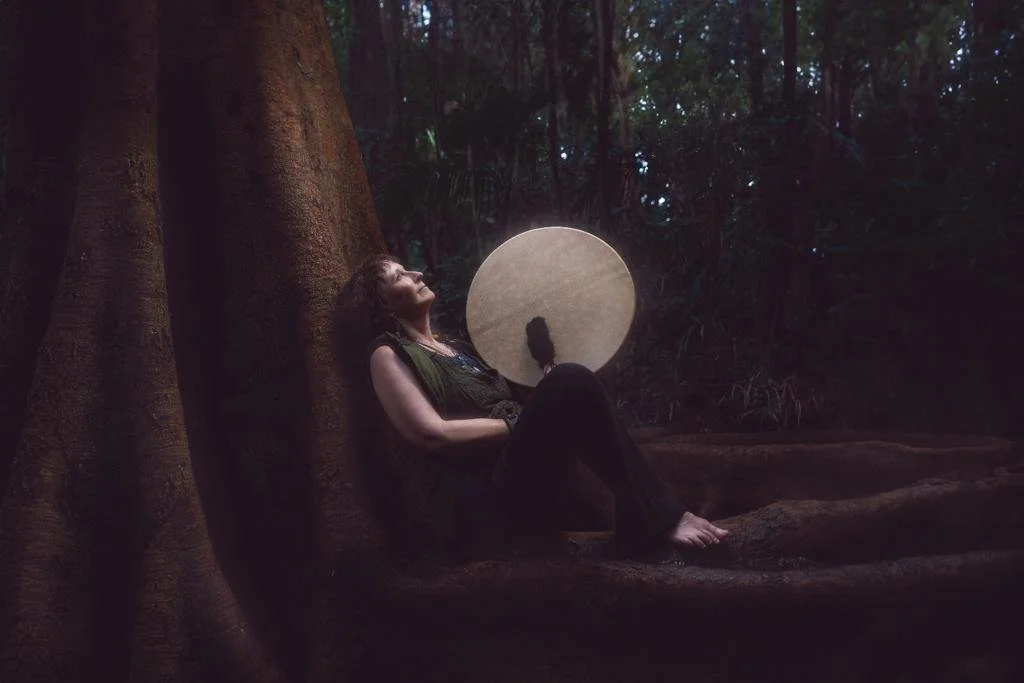
The Healing Power of Frame and Medicine Drums in Sound Healing
Frame and medicine drums are used in sound healing to create steady, grounding rhythms and immersive vibrations. Rhythmic drumming may encourage relaxation, focused awareness and a greater sense of connection with the body. Within a sound healing session, drums can complement instruments such as gongs, singing bowls, chimes and the voice.
There is something deeply instinctive about the sound of a drum
Long before the development of many of the instruments we associate with music today, people across cultures were creating rhythm with drums and other percussion instruments. Rhythm has accompanied ceremony, storytelling, celebration, dance, community gatherings and contemplative or spiritual practices for generations.
Within contemporary sound healing, drums bring something quite different to the experience.
Where singing bowls may create sustained harmonic tones and gongs can build complex layers of sound, a drum introduces
pulse, rhythm and movement.
Its sound can be strong or gentle, spacious or repetitive. A slow heartbeat-like rhythm can create a sense of steadiness, while more flowing patterns can bring energy and movement into a sound journey.
At Lakshmi Sound Sanctuary, instruments are not simply played because they produce beautiful sounds. Each instrument has its own qualities, and the way it is introduced, played and combined with other sounds forms part of the overall experience.
Frame and medicine drums can be particularly powerful examples of this.
What Are Frame and Medicine Drums?
A frame drum is one of the simplest and oldest general forms of drum.
It typically consists of a relatively shallow circular frame with a membrane stretched across it. Frame drums exist in many musical traditions around the world and vary considerably in their materials, construction, playing techniques and cultural significance.
The term medicine drum is also commonly used within contemporary wellness, spiritual and sound healing communities, often referring to a hand-held drum associated with intentional, ceremonial or meditative practice.
It is important, however, not to treat all traditional drums or practices as interchangeable.
Different Indigenous and cultural traditions have their own relationships with drums, ceremonies and meanings. Contemporary sound healing practice should therefore approach culturally specific terminology and traditions with respect rather than suggesting that there is one universal historical practice known as "medicine drumming".
Within a modern sound healing setting, a hand-held frame-style drum may instead be used because of its physical and acoustic qualities: its deep resonance, strong pulse and ability to create anything from gentle repetitive rhythms to more dynamic passages of sound.
Why Rhythm Has Such a Powerful Effect on Us
Rhythm surrounds us.
Our lives contain repeating patterns: breathing, walking, movement and the beating of the heart.
Perhaps this is one reason rhythmic sound can feel so immediate. Rather than simply hearing a drum as an external musical sound, people can sometimes experience rhythm physically.
Research into rhythmic auditory stimulation and drumming is still developing, particularly when we move from general drumming research to specific claims about sound healing.
However, a 2025 scientific review examining drumming and other forms of rhythmic auditory stimulation found that the available behavioural evidence consistently associated rhythmic sound with experiences of absorption and relaxation.
Researchers are also exploring whether repetitive rhythmic stimulation may influence patterns of neural activity, although the mechanisms involved remain an active area of investigation.
For sound healing practitioners, this scientific curiosity complements something people often notice experientially: repetition can give the mind something simple and consistent upon which to rest.
Instead of following a stream of thoughts, attention can gradually move towards the rhythm.
Beat.
Pause.
Beat.
Pause.
That simplicity can become part of the meditative quality of the experience.
How Drums Are Used in Sound Healing
A drum does not need to dominate a sound healing session.
In fact, some of its most effective uses can be subtle.
A practitioner may introduce a slow, spacious pulse to establish a sense of grounding at the beginning of a sound journey.
The rhythm may gradually develop before receding again.
At another point, a drum might be used as a transition between different sections of a sound bath.
It can also create contrast.
After experiencing the strong physical presence of a drum, the delicate sound of chimes, bells or singing bowls can feel particularly spacious.
This interaction between instruments is an important part of sound healing practice.
The experience is not simply a collection of instruments being played one after another.
It is the relationship between sound, silence, rhythm, resonance and the person receiving the experience.
The Potential Benefits of Drumming in Sound Healing
Research should not be interpreted as evidence that a particular drum can "heal" a medical condition.
However, studies of drumming and rhythmic auditory stimulation provide some interesting insights into why rhythm
may have value within wellbeing practices.
Potential experiences associated with therapeutic or intentional drumming may include:
Deep Relaxation
Repetitive rhythm can provide a simple point of attention.
For some people, this can help reduce mental distraction and encourage a quieter, more inwardly focused state.
Grounding
Low drum tones and a steady pulse can feel physically present.
This may help bring awareness away from constant thinking and towards bodily sensation and the immediate experience of sound.
Meditation and Focus
Meditation does not always need to happen in silence.
For people who find silent meditation challenging, rhythm can provide an auditory anchor for attention.
Emotional Reflection
Sound can sometimes create space for emotions or memories to surface.
This is highly individual and should never be forced or promised, but a carefully held sound healing environment
can provide an opportunity for personal reflection.
Connection and Shared Experience
Group drumming has also been studied within music therapy and wellbeing settings.
Research has explored possible effects relating to stress, psychological wellbeing, social connection and some physiological measures. Results are encouraging in several areas, although research varies considerably in methodology and should not be interpreted as proof that drumming treats specific health conditions.
Drumming for Grounding and Embodied Awareness
One of the distinctive characteristics of a drum is its physicality.
You may hear a singing bowl as a clear resonant tone.
A drum can sometimes feel more like a pulse.
Depending on the instrument, room and playing technique, lower frequencies can create sensations that seem to move through the space.
This gives the drum a useful role when encouraging embodied awareness.
During periods of stress or mental busyness, attention can become dominated by thoughts about what has happened or what needs to happen next.
Sound provides something happening now.
A steady rhythm provides an even clearer reference point.
Rather than trying to force the mind to become quiet, the participant can simply notice the next beat.
And then the next.
This is one of the reasons rhythm can work so naturally alongside meditation, breath awareness and restorative sound practices.
Rhythm, Relaxation and Meditation
One of the most interesting areas of contemporary research concerns the relationship between repetitive rhythmic sound and states of consciousness.
Researchers have investigated whether sustained rhythmic auditory stimulation can influence attention, absorption and neural activity.
A 2025 review published in the Annals of the New York Academy of Sciences examined evidence relating to drumming, binaural beats and sound-based spiritual practices.
Across the studies reviewed, relaxation and absorption emerged as recurring characteristics of experiences created through rhythmic sound.
The precise neurological mechanisms remain uncertain.
One hypothesis involves a process known as neural entrainment, in which rhythmic external stimulation may interact with
oscillatory activity within the brain.
This remains an area requiring further research.
For sound healing, the important point is not that a drum automatically changes someone's brainwaves in a predictable way.
Human beings are far more complex than that.
Rather, repetitive rhythm appears capable of creating conditions that can support focused attention, absorption and relaxation for some people.
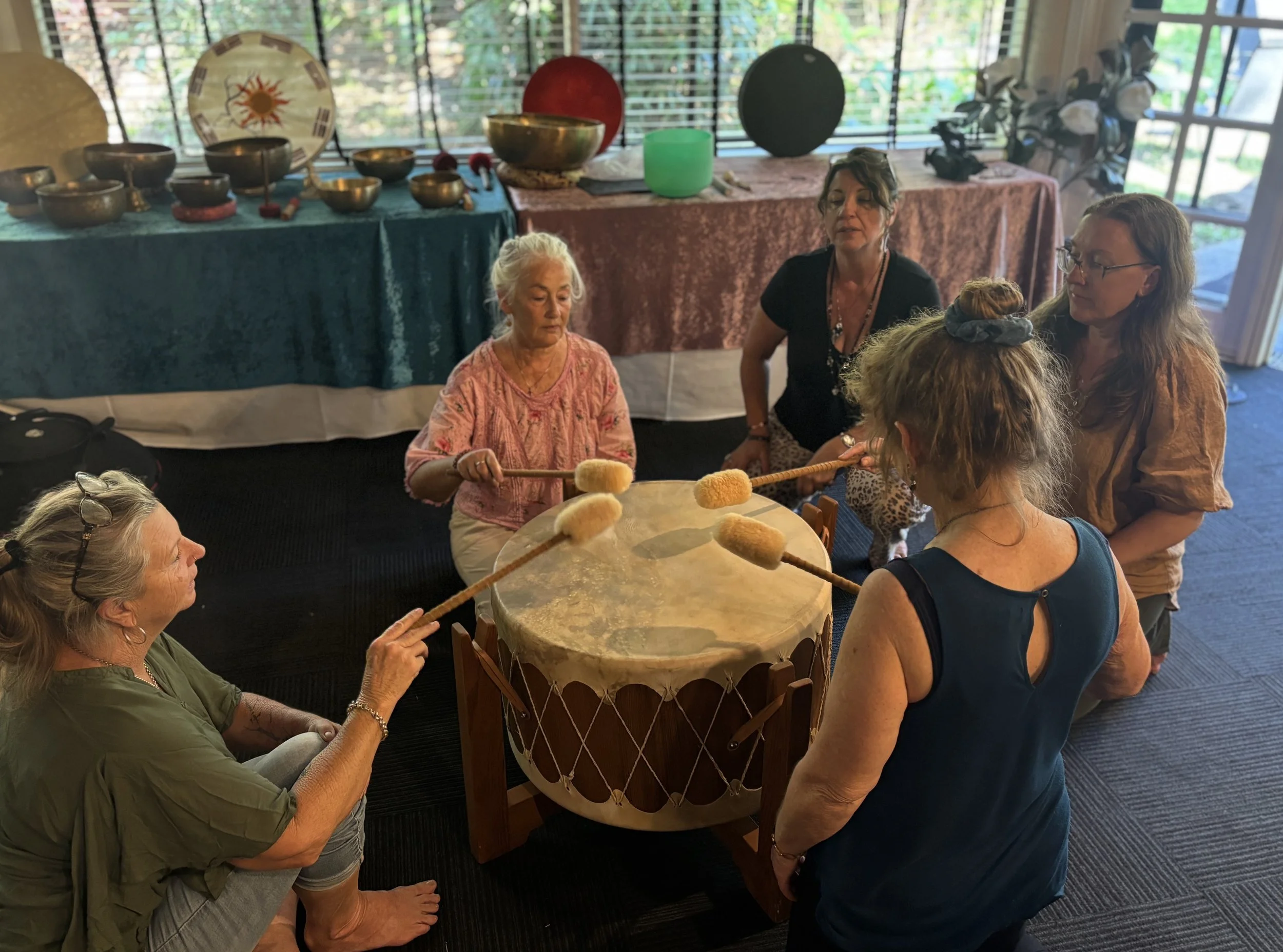
Drums Within a Sound Bath
A sound bath can contain many different sonic textures.
Depending on the practitioner and session, these might include:
Himalayan singing bowls
crystal singing bowls
gongs
tuning forks
chimes
bells
voice
percussion
frame drums
hand drums
other therapeutic sound instruments.
Each contributes something different.
Drums introduce a strong rhythmic dimension.
For example, a session might begin quietly before a gentle drum pulse gradually emerges.
The rhythm may create a feeling of movement before transitioning into the sustained resonance of bowls or gongs.
Later, delicate chimes might introduce spaciousness and clarity.
Silence itself can then become part of the experience.
Used this way, the drum is not an isolated technique.
It becomes one voice within a carefully considered landscape of sound.
The Importance of Intention, Timing and Sensitivity
A drum can be powerful.
That means it also needs to be used sensitively.
More volume, faster rhythms or greater intensity do not automatically create a more effective sound healing experience.
Quite often, the opposite is true.
A skilled practitioner needs to remain aware of the people receiving the session and the overall direction of the sound journey.
Questions include:
How strong should the rhythm be?
How long should it continue?
Does the session need energy or stillness at this moment?
Should the drum build intensity or gradually disappear?
Would another instrument or silence be more appropriate?
This sensitivity becomes particularly important in professional sound healing practice.
Sound is not simply delivered at someone.
The practitioner creates and holds an environment in which sound can be experienced safely and comfortably.
Experiencing Drums at Lakshmi Sound Sanctuary
At Lakshmi Sound Sanctuary in the Northern Rivers of NSW, sound is explored through a broad family of therapeutic instruments and practices.
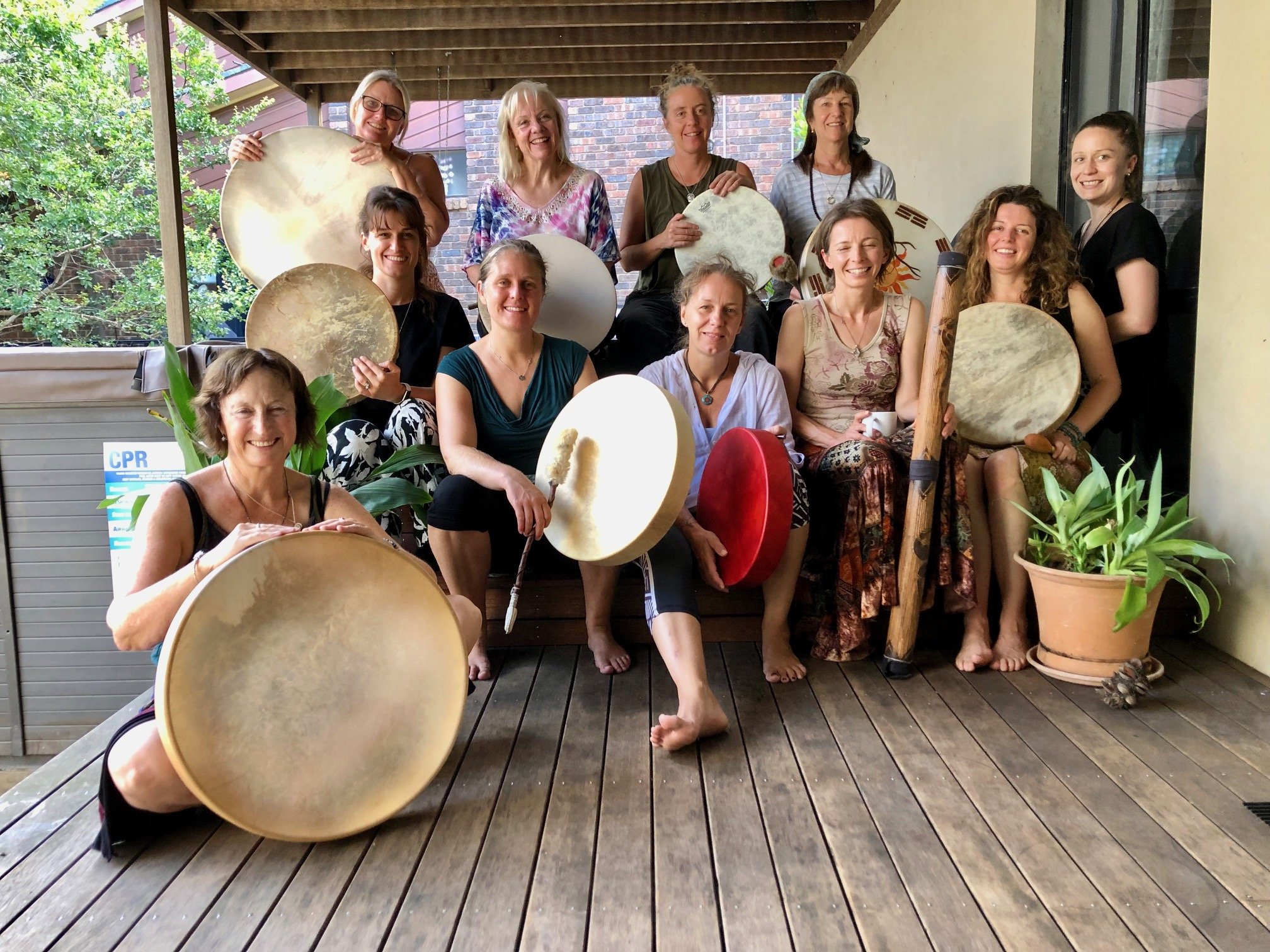
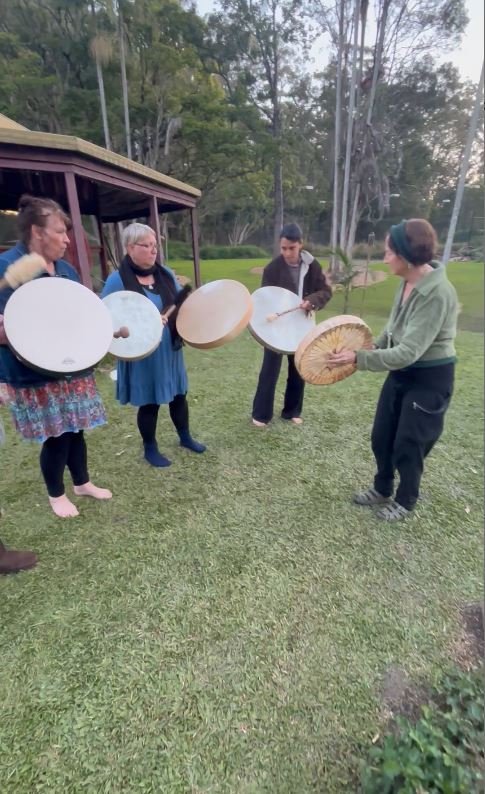
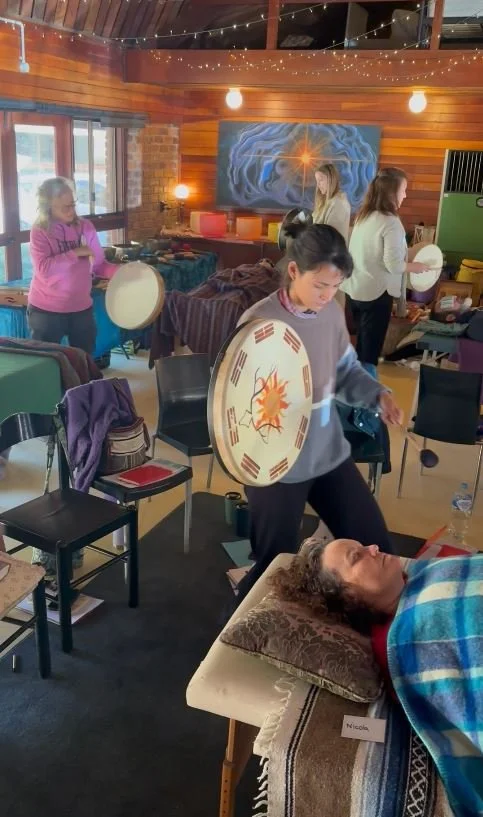
Frame and medicine drums form part of this wider landscape alongside instruments including Himalayan singing bowls, crystal bowls, gongs, tuning forks, chimes, bells and voice.
Through sound baths, individual sound healing treatments, sound healing training, workshops and retreats, participants can experience how these different instruments interact.
For some people, it is the deep resonance of a gong that captures their attention.
For others, it may be the clarity of a singing bowl.
And sometimes it is the simplicity of a drum.
A steady rhythm.
A pulse.
A reminder to return attention to this moment.
That may be one of the most beautiful qualities a drum brings to sound healing.
It does not always ask us to understand the sound.
Sometimes, it simply invites us to listen.
Frame drums are among the world's oldest general forms of percussion instrument, although individual drum traditions have distinct cultural histories and meanings.
Rhythm creates a different sound healing experience from sustained instruments such as singing bowls and gongs, introducing pulse, repetition and movement.
Research into rhythmic auditory stimulation suggests associations with relaxation and absorption, although the underlying neurological mechanisms continue to be studied.
Drumming can provide an auditory anchor for meditation, particularly for people who find complete silence difficult.
Low, repetitive drum sounds may encourage grounding and embodied awareness by bringing attention towards rhythm and physical sensation.
Drums can complement other sound healing instruments, including gongs, singing bowls, chimes, tuning forks and voice.
Intensity is not the goal. Professional use of drums requires sensitivity to rhythm, volume, duration, timing and the needs of participants.
Scientific evidence should be communicated carefully. Research into drumming is promising in areas including relaxation, wellbeing and physiological responses, but this does not mean a drum can be claimed to treat or cure medical conditions.
Cultural respect matters. Traditional drumming practices should not be reduced to a single universal story or appropriated without understanding their cultural context.
Within sound healing, the drum can become a simple invitation into the present moment through rhythm, repetition and attentive listening.
Key Takeaways & Highlights
Frame and Medicine Drums in Sound Healing Frequently Asked Questions
-
Frame drums appear in many musical traditions around the world and vary significantly in size, materials, playing style and cultural meaning.
Within contemporary sound healing, their most distinctive quality is rhythm.
Many instruments commonly associated with sound healing, such as singing bowls, tuning forks and gongs, can create sustained resonant tones. A frame drum creates a more obvious pulse.
A practitioner might use a slow, steady rhythm to establish a grounded atmosphere, gradually build a pattern during part of a sound journey, or use the drum to transition between different instruments.
The sound does not necessarily need to be loud or intense. Gentle, spacious drumming can be particularly effective.
Research into rhythmic auditory stimulation suggests that repetitive rhythmic sounds may encourage experiences characterised by relaxation and absorption, although individual responses vary.
As with every sound healing instrument, the effectiveness of a frame drum depends considerably on how, when and why it is used.
-
"Medicine drum" is a term commonly used in contemporary wellness and spiritual communities for drums associated with intentional, ceremonial or contemplative practices. However, culturally specific drum traditions have their own histories and meanings and should be approached respectfully.
-
Drumming may support relaxation, focused attention, grounding and meditative awareness. Research into rhythmic sound also suggests that repetitive auditory stimulation can encourage states of absorption and relaxation.
-
Yes, repetitive and carefully paced drumming may encourage relaxation for some people by giving attention a steady rhythmic focus and creating an immersive listening experience.
-
Yes. Repetitive drumming can provide a simple auditory focus during meditation, helping some people maintain awareness of the present moment without needing complete silence.
-
A drum can feel more physical and rhythmic than many other sound healing instruments. Depending on the drum, room and playing technique, participants may experience its sound as a strong pulse or vibration moving through the space.
-
Drums primarily introduce rhythm and pulse, while singing bowls and gongs are often used for their sustained resonance and complex harmonic qualities. Combining them can create contrasting layers within a sound healing experience.
-
Learning to strike a drum is relatively straightforward.
Learning to use a drum sensitively within professional sound healing requires much more awareness.
Practitioners need to consider rhythm, tempo, dynamics, duration, proximity and the role the instrument plays within the wider session.
They also need to recognise that people respond differently to sound.
A rhythm one participant finds grounding may feel too intense to another person.
Professional training therefore moves beyond simply learning how instruments produce sound.
Students develop an understanding of how instruments can be combined, how a sound journey can be structured, when silence is appropriate and how to remain attentive to the people receiving the experience.
Lakshmi Sound Sanctuary's sound healing training and workshops provide opportunities to explore a broad range of therapeutic sound instruments and develop a more intentional relationship with sound.
Join Upcoming Sound Healing Training Workshops
Reading about sound healing is an inspiring first step, but the true power of drums can only be experienced through listening. At Lakshmi Sound Sanctuary in the Byron Bay Hinterland, these timeless instruments are thoughtfully woven into sound baths, one-to-one healing sessions, retreats, and practitioner training. Whether you're seeking deep relaxation, personal growth, or professional education, experiencing these delicate sounds
first hand may open the door to a deeper sense of calm, presence, and connection.
Join Our Newsletter
