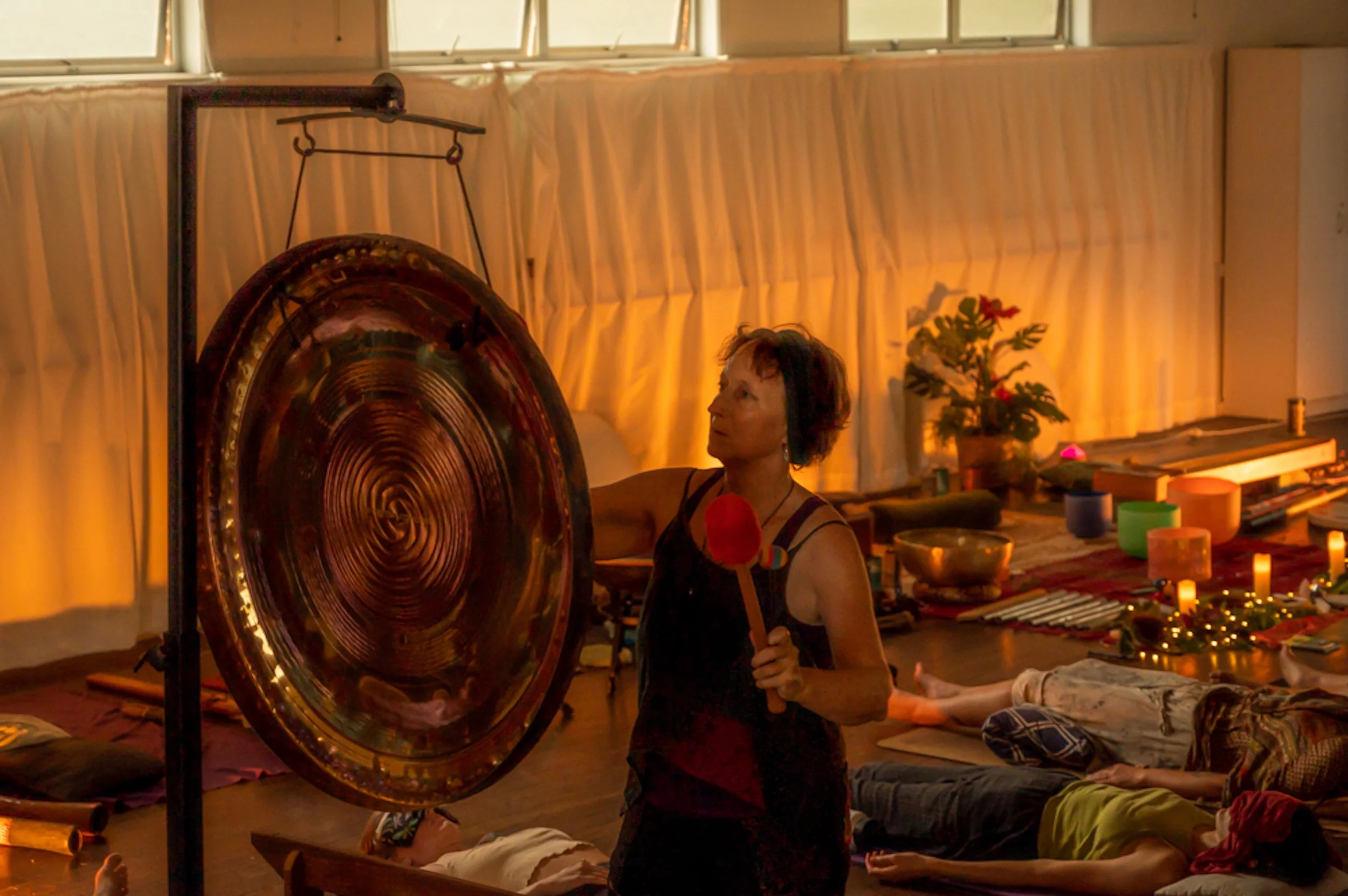
The Transformative Power Of Sound Baths: A Journey Into Healing With Annie Ridgway
There are moments when what we need most is simply permission to stop.
To step away from the constant movement of daily life, put down the mental to-do list and allow ourselves to be present without needing to achieve anything. A sound bath can create that space. Rather than asking you to concentrate intensely or follow a complicated meditation technique, a sound bath invites you to lie down, become comfortable and listen.
Around you, layers of sound gradually unfold. Singing bowls may create warm, resonant tones. A gong can build from the gentlest vibration into an expansive wave of sound. Chimes introduce delicate higher frequencies. Drums may provide grounding rhythm. Then, just as importantly, there can be silence.
Together, these elements create an immersive experience where sound becomes something you don't simply hear — it can become something you experience through your whole awareness.
For many people, this creates an opportunity to slow down, become more present and reconnect with themselves.
What Is A Sound Bath?
A sound bath is an immersive listening experience created using sound, resonance, rhythm and silence.
Despite the name, there is no water involved. The word bath describes the feeling of being surrounded or "bathed" in sound.
During a sound bath, a practitioner may use instruments such as Himalayan singing bowls, crystal singing bowls, gongs, chimes, bells, tuning forks, drums, percussion instruments and the voice.
Rather than following a melody in the way you might listen to a song, participants are surrounded by changing layers of tone, vibration, rhythm and resonance. Most sound baths require very little from the participant. You are usually invited to lie or sit comfortably, close your eyes if that feels appropriate and allow yourself to listen.
This simplicity is part of their appeal.
There is nowhere you need to get to and no particular experience you need to have.
Why Sound Can Feel So Powerful
Sound is not only something we hear intellectually. We experience it physically and emotionally too.
Anyone who has felt the low frequencies of music through the floor at a concert or noticed how a particular song can instantly evoke a memory has experienced this relationship firsthand.
A sound bath works with this naturally immersive quality of sound.
Different instruments create very different experiences.
A singing bowl may produce a sustained resonant tone. A gong can create complex layers of sound that continually evolve. Chimes can introduce clarity and spaciousness. A drum creates rhythm that can feel grounding and physical.
A thoughtfully facilitated sound bath brings these different qualities together.
Rather than simply playing instruments one after another, the practitioner considers elements such as volume, intensity, rhythm, timing, silence, proximity and the overall journey of the session.
This is one of the reasons professional practice matters.
More sound is not necessarily better sound.
Sometimes the quietest moment can be the most powerful.
What Happens During a Sound Bath?
Every practitioner and every sound bath will be slightly different, but sessions commonly begin with time to arrive and settle.
You may be invited to make yourself comfortable on a mat with cushions, blankets or other supports.
There may be a short guided relaxation, breathing practice or invitation to become aware of your body.
From there, the sound journey begins.
The experience may start gently before gradually introducing different instruments and textures.
At times the sound may feel spacious and delicate. At others it may become deeper, fuller or more enveloping.
Periods of silence may also be deliberately included.
Eventually the intensity decreases and the session moves towards stillness, allowing time for the experience to settle before participants return their awareness to the room.
There is no correct way to experience any of this.
Some people remain very aware of every sound.
Others drift into a deeply restful state somewhere between waking and sleep.
Some notice physical sensations.
Others experience thoughts, imagery, memories or emotions.
And sometimes the experience is simply an opportunity to rest.
All of these responses can be valid.
The Potential Benefits of Sound Baths
People attend sound baths for many different reasons.
Some are looking for relaxation. Others are interested in meditation, mindfulness or personal reflection. Some simply enjoy the opportunity to stop and experience sound in a completely different way.
Potential benefits people commonly associate with sound bath experiences include:
encouraging deep relaxation
creating space away from everyday stimulation
supporting meditation and mindfulness
helping attention return to the present moment
encouraging awareness of the body
providing space for emotional reflection
supporting rest and stillness
creating opportunities for personal reconnection
providing an accessible introduction to meditation
offering a shared experience of quiet and reflection
It is important, however, to distinguish personal experience from medical evidence.
Sound baths should not be presented as a treatment or cure for medical or psychological conditions unless appropriate evidence supports that claim.
Research into sound meditation and singing bowls is developing, and some studies have reported promising results relating to tension, mood and relaxation. However, the overall evidence base remains relatively small.
Sound baths are therefore better understood as a complementary wellbeing and meditative practice rather than a replacement for appropriate medical or psychological care.
Sound Baths and Deep Relaxation
One of the most commonly described aspects of a sound bath is relaxation.
Modern life asks a great deal of our attention.
Phones, emails, work, family responsibilities, traffic, conversations and endless streams of information can leave very little space where nothing is expected from us.
A sound bath creates a deliberate contrast.
You are given permission to lie down.
There is nothing to read.
Nothing to scroll through.
Nothing to accomplish.
Sound becomes the focus.
For some people, this makes it easier to step away from repetitive thinking and become absorbed in the immediate sensory experience.
The combination of a comfortable environment, intentional stillness, sustained listening and reduced external demands may create conditions where relaxation becomes easier.
That doesn't mean every participant will immediately enter a profound state of calm.
Experiences vary.
But even taking an hour away from normal activity to rest and listen can be meaningful.
Sound Baths as a Form of Meditation
Meditation can sound simple until you try it.
Being told to "clear your mind" often has exactly the opposite effect.
Suddenly you become aware of every thought.
Sound can provide another approach.
Instead of trying to remove thoughts, you have something tangible to return your attention to.
A singing bowl rings.
You listen as the sound grows, changes, and eventually disappears.
A chime enters.
A gong expands.
There is silence.
Your mind wanders.
Then another sound gives you an opportunity to return.
In this sense, sound can become an anchor for awareness.
This can make sound baths particularly approachable for people who find silent meditation difficult.
The goal isn't necessarily to stop thinking.
It is to notice when attention has wandered and gently return to what is happening now.
Begin Your Journey
Sound baths are more than a relaxation technique; they are a holistic approach to nurturing the mind, body, and spirit. Whether you are seeking relief from the demands of daily life, emotional balance, or a deeper connection to your authentic self, I look forward to sharing this transformative journey with you.


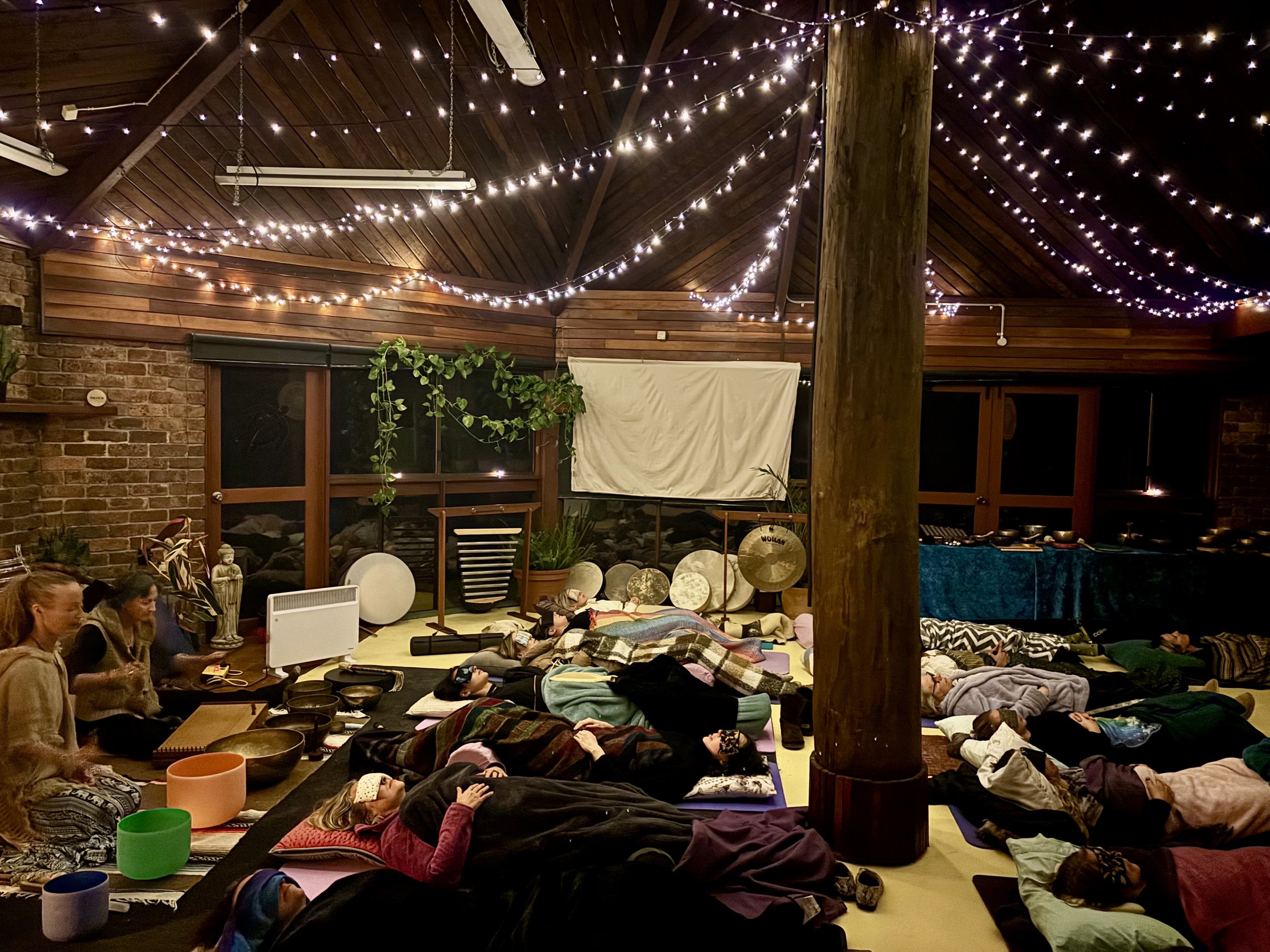

What Instruments Are Used in a Sound Bath?
One of the beautiful aspects of sound healing is the enormous variety of instruments available.
Himalayan Singing Bowls
Himalayan or Tibetan-style singing bowls produce rich, resonant tones containing multiple harmonics.
They can create both delicate and powerful soundscapes and are frequently used throughout sound meditation.
Crystal Singing Bowls
Crystal bowls are known for their sustained, clear tones.
Different bowls can be played individually or together to create layered harmonic experiences.
Gongs
Gongs have an extraordinary range.
Played gently, they can create subtle shimmering tones. As intensity increases, the sound can become vast, complex and deeply immersive.
Because of this power, sensitivity and timing are particularly important.
Chimes and Bells
Chimes and bells introduce lighter, clearer sounds.
They can be particularly effective when transitioning between different parts of a sound journey or bringing
awareness back towards the present moment.
Drums
Drums introduce rhythm.
Unlike the sustained resonance of bowls and gongs, a drum can provide a repeated pulse that feels grounding and physical.
Tuning Forks
Tuning forks create precise tones and may be incorporated into some sound healing practices.
Voice
The human voice is one of our oldest instruments.
Toning, humming, mantra and other vocal practices can introduce another deeply human layer to the sound experience.
A skilled practitioner does not need to use every available instrument.
The art lies in knowing what to introduce, when to introduce it and when to leave space.
Do Sound Baths Affect Everyone the Same Way?
No.
This is an important part of understanding sound healing.
There is no universal sound bath experience.
One person may find a gong profoundly relaxing while another may prefer the gentler resonance of singing bowls.
Someone may drift towards sleep while the person beside them remains completely alert.
One participant may experience strong emotion while another simply enjoys the sounds.
Your response may even change from one session to the next.
How you arrive matters.
Your energy, mood, expectations, previous experiences and comfort within the environment can all influence how a session feels.
Rather than approaching a sound bath expecting a particular outcome, it can be more helpful to approach it with curiosity.
What Does the Research Say About Sound Meditation?
Scientific research specifically examining modern sound baths is still developing.
One observational study involving 62 participants examined a Tibetan singing bowl meditation and reported reductions in tension, anger, fatigue, depressed mood and anxiety immediately after the session, alongside increased reported spiritual wellbeing.
However, observational research cannot establish that sound itself caused these changes.
A later systematic review examining singing bowl research found reports of improvements across a range of psychological and physiological measures but also highlighted the small number of studies and methodological limitations.
The researchers concluded that stronger research was needed before evidence-based therapeutic recommendations could be made.
This distinction matters.
There is a growing and interesting area of research surrounding sound, meditation and complementary wellbeing practices, but we should not make the evidence say more than it currently does.
Sound baths can be valued for the experience they provide while research continues to explore their potential effects.
Key Takeaways & Highlights
A sound bath is an immersive listening experience using sound, resonance, rhythm and silence.
Sound baths commonly use singing bowls, crystal bowls, gongs, chimes, drums, tuning forks and voice.
One of their greatest strengths is accessibility, participants generally don't need previous meditation experience.
Sound can provide an anchor for attention, offering an alternative for people who find silent meditation challenging.
Sound baths may create conditions that encourage relaxation, mindfulness, rest and embodied awareness.
Everyone experiences sound differently; there is no single "correct" sound bath experience.
Professional facilitation involves more than playing instruments: timing, volume, sequencing, sensitivity and silence all matter.
Research into singing-bowl meditation has produced promising findings, but the broader scientific evidence remains limited.
Sound baths should be presented as a complementary wellbeing and meditative experience, not as a substitute for medical care.
The transformative quality of a sound bath may lie less in promising an outcome and more in creating space to stop, listen and reconnect.
Transformative Power of Sound Baths Frequently Asked Questions
-
People attend sound baths for many different reasons, and the experience can vary considerably between individuals.
One of the most commonly reported reasons is relaxation. A sound bath creates a dedicated period where participants can lie down, step away from everyday stimulation and focus their attention on sound.
Sound can also provide an accessible focus for meditation. Instead of trying to "clear your mind", you can simply return your attention to the next bowl, gong, chime or period of silence whenever your thoughts wander.
Some people also notice greater awareness of their breathing, body or emotions during a session.
Research specifically examining sound baths remains limited. Studies involving singing-bowl meditation have reported promising changes in areas such as tension and anxiety, but systematic reviews have highlighted the need for stronger research before therapeutic conclusions can be drawn.
It is therefore most appropriate to view sound baths as complementary wellbeing experiences rather than medical treatments.
-
There probably isn't one single mechanism explaining the sound bath experience.
Several elements happen simultaneously.
First, you intentionally stop normal activity. You usually lie down, become comfortable and reduce external distractions.
Second, your attention is directed towards sound. Instead of focusing on work, phones or everyday responsibilities, you begin noticing changing tones and vibrations.
Third, resonant instruments create complex and evolving sounds. Singing bowls can sustain tones for long periods, gongs generate multiple layers of harmonics, while drums introduce rhythm and chimes create contrasting higher tones.
This changing sensory environment can provide a focus for awareness.
The physical setting also matters. Feeling safe and comfortable, having permission to rest and being guided by a practitioner all contribute to the experience.
For these reasons, a sound bath shouldn't be reduced to the idea that a particular frequency automatically produces a particular physical or emotional result.
It is a much more holistic experience involving sound, attention, environment, stillness and individual response.
-
Meditation often involves bringing awareness to something happening in the present moment.
That might be your breath, physical sensations, a mantra or simply the movement of thoughts.
During a sound bath, sound can become that focus.
A singing bowl rings and you listen.
The sound changes and eventually fades.
Another sound appears.
Your attention wanders and, when you notice, you return to listening.
This can make sound meditation particularly accessible for people who find sitting silently difficult.
You aren't necessarily trying to empty your mind or stop thinking. Instead, the continually changing soundscape gives your awareness something tangible to return to.
At the same time, you don't have to consider a sound bath "meditation" to benefit from the experience.
You can simply lie down, listen and rest.
-
There is no fixed collection of instruments required for a sound bath.
Different practitioners develop their own approach, and every instrument contributes a different sonic quality.
Himalayan singing bowls create rich resonant tones containing complex harmonics, while crystal singing bowls tend to create clearer sustained tones.
Gongs can produce an enormous spectrum of sound, from subtle shimmering tones through to powerful immersive waves.
Chimes and bells create lighter, more delicate sounds and can help mark transitions during a sound journey.
Drums provide rhythm and can create a more grounded and physical listening experience.
Tuning forks create precise tones and may also be incorporated into some forms of sound healing.
The human voice can be used through humming, toning, mantra or other vocal practices.
The effectiveness of a sound bath isn't determined by the number of instruments in the room. Thoughtful selection, timing, volume, sensitivity and the use of silence can be equally important.
-
Your first sound bath should feel relatively simple from the participant's perspective.
You'll normally arrive and be given time to settle into the space. Depending on the session, mats, cushions, bolsters or blankets may be provided, or you may be asked to bring some of these items.
The practitioner may begin with breathing, relaxation or a short guided meditation.
You will then generally be invited to close your eyes if comfortable and listen as different instruments are introduced.
You don't need to analyse the sounds.
Some people remain very alert. Some become deeply relaxed. Others drift towards sleep.
You may notice thoughts, emotions, imagery or physical sensations — or nothing particularly dramatic at all.
Try not to judge the session by whether something extraordinary happens.
Your experience is your experience.
For a first sound bath, one of the most helpful things you can bring is simply curiosity.
-
It is quite common for people to become very relaxed during a sound bath.
Once you are lying comfortably in a quiet environment with no immediate demands on your attention, you may naturally become sleepy.
Some participants remain fully conscious of every sound, while others move in and out of sleep.
There isn't necessarily a "better" experience.
If your intention is meditation, you might gently return your attention to sound when you notice yourself drifting.
If your body seems to need rest, however, allowing yourself to relax can be equally valid.
The important point is to remove the pressure to experience the session in a particular way.
Sound baths are not performances that participants have to concentrate on perfectly.
They are opportunities to listen, rest and become present in whatever way feels appropriate for you.
-
Yes. Sound baths can be particularly accessible for beginners because you generally don't need to learn a meditation technique or have previous experience with sound healing.
If you have specific health concerns, sensory sensitivities, hearing conditions or other reasons why loud or resonant sound may be uncomfortable, it is sensible to speak with the practitioner before attending. -
The Northern Rivers and Byron Bay region has become home to a broad range of meditation, wellness and complementary practices, including sound healing.
Lakshmi Sound Sanctuary offers opportunities to experience sound in both intimate and group settings.
Annie's approach draws upon a wide range of sound healing instruments and practices, creating intentionally facilitated experiences designed to provide space for relaxation, meditation, reflection and reconnection.
Different sound bath events may offer different environments and experiences, from smaller sanctuary gatherings through to larger immersive group sound journeys.
If you have never experienced a sound bath before, you don't need any previous knowledge or meditation experience.
Come comfortably, bring curiosity and allow yourself to discover how you personally respond to the experience.
Join Upcoming Sound Baths
Annie’s sound baths offer an opportunity to immerse yourself in healing vibrations and connect with a like-minded community.
